
Battle Simulator: Merge Master
Deli venturesStrategy
3.52.00 Reviews
- Version
- 1.1.7
- Installs
- 100.00K
- Age Rating
- Teen
Screenshots
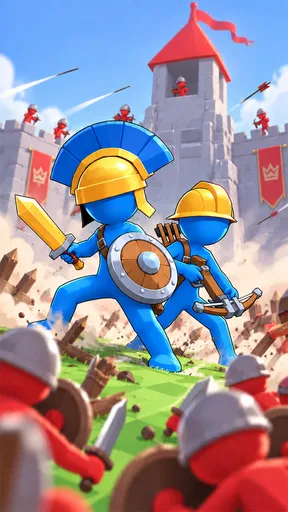
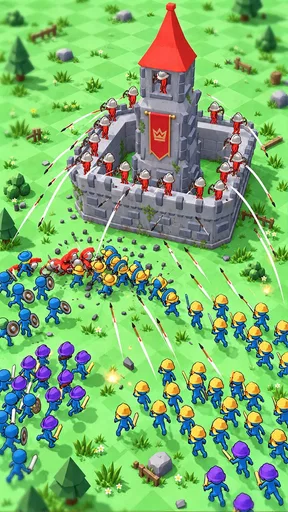
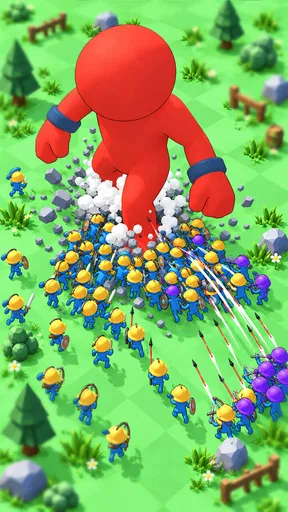
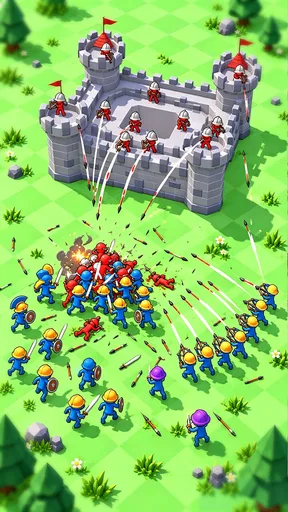
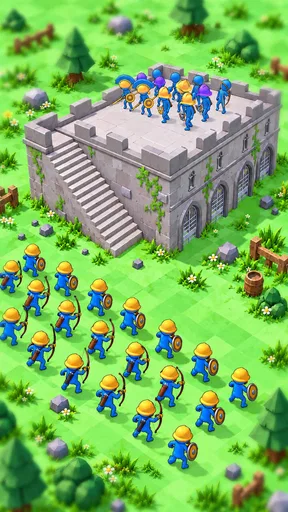
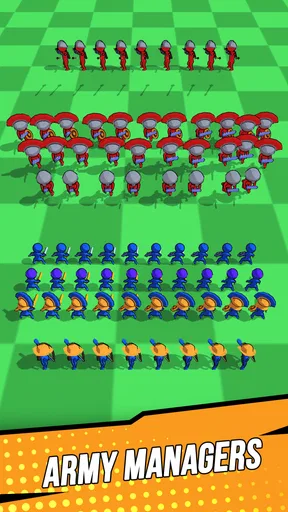
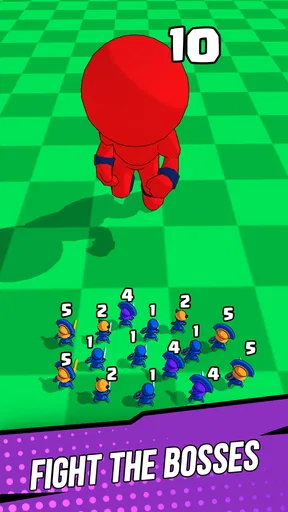
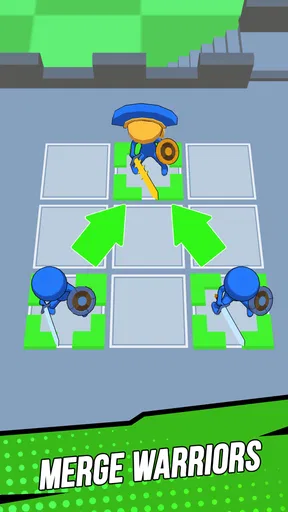
Our Review of Battle Simulator: Merge Master
 Analysis by Appyee
I spent time with Battle Simulator: Merge Master as a mobile strategy game and came away with a fairly clear impression: it is aimed at players who enjoy short battle decisions, territorial defense, and the satisfaction of building toward a stronger force. Its central idea is easy to understand, but the value of that simplicity depends heavily on what you want from a strategy game. If you are looking for a quick battlefield distraction, it has an approachable starting point. If you expect a deep campaign, carefully explained systems, or a highly transparent competitive environment, you may find yourself wanting more.
The game is free to download, carries a Teen content rating, and comes from Deli ventures. It first appeared on April 24, 2023, and the current version is 1.1.7, with Android support beginning at version 8.0. That makes it accessible to a wide range of older Android devices, although the experience will still depend on the phone’s performance and screen size. The store presents it simply as a battle simulator, while the broader appeal comes from combining tactical placement with the familiar merge-style feeling of turning smaller or weaker pieces into a more capable army.
How the battle loop feels in everyday play
My first useful observation is that this is not the kind of strategy game that asks me to study a large rulebook before I can enjoy it. The basic fantasy is immediate: prepare a force, defend territory, and look for a way to overwhelm the opposing side. That directness is helpful when I only have a few minutes available. I can approach a session as a compact decision-making exercise rather than as a long campaign that requires a large uninterrupted block of time.
The merge concept also gives each preparation phase a small puzzle. Instead of treating every unit as an isolated object, I naturally start thinking about which pieces should be combined, which should remain separate, and whether improving one part of the formation creates a weakness elsewhere. That is more interesting than simply tapping an attack button, because every upgrade decision has an opportunity cost. A stronger individual unit is not automatically the best answer if the rest of the formation becomes too thin.
I found the most enjoyable moments came before the fight rather than during the spectacle itself. Looking at the available force and deciding where strength matters most creates a modest but satisfying layer of planning. The game works best when I resist the urge to merge everything immediately. Keeping a workable spread can be more useful than chasing one impressive unit, especially when defense depends on covering more than one approach.
That is one of the practical habits I would recommend to a new player: do not treat every merge as an automatic improvement. First consider whether the resulting formation still has enough coverage. A large unit in the wrong place can be less valuable than several smaller units positioned to protect separate areas. This is a simple principle, but it is the kind of decision that gives the game more texture than its short store description suggests.
A good fit for short sessions
In an everyday scenario, I can imagine playing during a commute, while waiting for an appointment, or between larger tasks at home. The game’s premise is easy to resume because the objective is not hidden behind a complicated narrative. I can focus on the immediate battlefield problem: what needs defending, where should I concentrate power, and whether my next merge improves the whole setup or only one corner of it.
That convenience is also a limitation. Players who enjoy long-form strategy usually want a sense that their decisions accumulate into a broad plan. A compact battle simulator can provide individual moments of choice without delivering the same strategic ownership as a full campaign game. If your favorite alternatives include detailed technology trees, diplomacy, base construction, or extended resource planning, this title is likely to feel deliberately lightweight.
I would describe the pacing as better suited to experimentation than to role-playing a complete commander. You can try a different arrangement, observe what breaks down, and adjust your next attempt. That makes failure less frustrating when I treat it as information. However, players who dislike repeating similar encounters may lose interest if the tactical variety does not keep expanding at the pace they expect.
Progression without assuming unlimited patience
One question I had while playing was whether progress feels like a reward or simply a way to keep the next battle out of reach. That distinction matters in a free strategy game. A healthy progression loop gives me reasons to improve my decisions; an irritating one makes me feel that the game is mainly asking me to wait, repeat, or spend.
Here, I would approach progression carefully rather than assuming that every stronger unit represents meaningful strategic growth. The merge structure can make advancement feel tangible because combining pieces produces an obvious change in the force. But visible improvement is not the same as deeper choice. The important test is whether new strength encourages different formations and tactics, or merely raises the numbers attached to familiar actions.
For that reason, I recommend keeping a personal note of what actually caused a victory. Was it a better merge, improved positioning, a more balanced defense, or simply having more power available? This small habit helps separate genuine learning from routine upgrading. It is especially useful for players who want to know whether the game rewards planning or mostly rewards persistence.
The available public reception is mixed rather than overwhelming: the game holds an average rating of 3.5 from 66 ratings, with 2 written reviews shown alongside it. I would not treat that as a final judgment, but it does suggest that expectations should stay measured. There is enough interest to make the game worth trying, yet not enough broad feedback to remove all uncertainty about how satisfying its longer-term progression will be.
Fairness, spending, and the questions that matter
I’d use this section to separate the appeal of a free download from the question of whether the game feels fair over time. My own test is to notice whether better planning can improve a result before considering any purchase, and whether the game makes the reason for a setback understandable. That practical check matters most when deciding if a quick trial deserves a longer place on your phone.
What free actually tells me
The game is listed as free, which removes the initial purchase barrier and makes experimentation easy. I can install it without committing money first, see whether the battle loop suits me, and stop if the style does not click. That is a meaningful advantage for a compact mobile strategy title, especially when the concept can sound more appealing in a description than it feels in the hand.
At the same time, “free” does not by itself explain the full spending experience. I do not want to pretend that a free download automatically means a generous progression system, nor do I want to claim that spending is required without clear evidence. The responsible conclusion is narrower: the entry cost is free, while the exact role of purchases in progression should be checked in the live game before anyone treats it as a long-term commitment.
This is also where I would advise parents to pay attention. The Teen rating is relevant even if the game looks simple at first glance. A younger player may also interpret free access as permission to keep playing or spending, so the device’s purchase controls and family settings are worth reviewing before handing it over. That is practical advice, not a claim about a particular monetization system.
How to judge pressure while playing
I use three personal tests when deciding whether a free strategy game feels fair. First, can I understand why I lost? Second, can I make a meaningful improvement without relying on a purchase? Third, does the game give me room to choose between several sensible approaches, or does it push me toward one obvious upgrade path?
Battle Simulator: Merge Master is most convincing when it passes the first test. The merge-and-defense structure gives me a clear place to look for mistakes: poor allocation, weak coverage, or an upgrade that improved one position while exposing another. If a defeat feels readable, I can accept it as part of the strategy. If the outcome feels disconnected from my decisions, the simulator loses much of its appeal.
The second and third tests are more important for long-term use. A free game can be perfectly enjoyable for casual sessions even if its progression is limited, but a player who wants a fair competitive challenge needs more transparency. I would not recommend spending money simply to solve an early difficulty spike. First learn the formation logic, try conservative merges, and see whether better play changes the result. If progress still feels blocked, that is a sign to reconsider whether this is the right game for your expectations.
Competitive fairness and the right comparison
The word “dominate” in the store summary creates an expectation of competition, but I would separate the feeling of winning battles from the standards of a serious competitive game. A title can make me feel like a commander without offering the deep balance, matchmaking transparency, or long-term strategic variety associated with established multiplayer strategy alternatives.
Compared with a traditional tower-defense game, this format seems more focused on preparing and combining forces than on continuously managing a battlefield lane by lane. Compared with a large real-time strategy game, it asks for much less attention and offers a more contained decision space. Compared with a puzzle game built entirely around merging, the defensive objective gives each combination a tactical purpose instead of making the merge itself the whole challenge.
That middle position is its strongest competitive advantage. I can recommend it to someone who finds full strategy games exhausting but still wants choices that matter. I would not recommend it to a player who needs a carefully documented esports-style environment or who judges fairness through extensive competitive systems. Those players will likely be happier with a more established alternative whose rules, balance, and progression are easier to examine.
A useful approach is to treat each battle as a test of allocation rather than a contest of speed. Build a formation that can survive several pressures instead of placing all confidence in the most powerful available piece. This reduces the risk of confusing a flashy merge with a sound plan. It also gives the game a fairer chance to show whether its strategy is genuinely rewarding.
What I would check before committing long term
There are a few details I would personally verify during the first sessions. I would look at how clearly the game explains unit strength, whether a failed battle reveals useful information, and whether progress remains understandable after the opening experience. I would also watch how often the game interrupts play with prompts or restrictions, because friction can matter more than the basic battle idea when a title is used every day.
I would not infer a detailed purchase model, advertising burden, or account policy from the short store wording alone. Those elements can affect trust, but they need to be judged in the current app rather than guessed. The same caution applies to performance: Android compatibility begins at 8.0, yet that does not guarantee identical smoothness across every supported phone. A modest test on your own device is more useful than a general assumption.
The public footprint is still fairly small, with over 100 thousand installs and only a handful of written reviews visible. That makes the game easy to approach as a personal trial, but it also means I would avoid making strong claims about its community, longevity, or competitive health. A smaller audience can be perfectly fine for a private casual game; it is more concerning if your main reason for downloading is a lively, dependable competitive scene.
Who should play and who should skip it
I think this game is a reasonable choice for casual strategy players who enjoy merging, defensive planning, and quick attempts at improving a formation. It may also suit someone who wants a low-commitment introduction to battle simulators without immediately learning a large collection of systems. The free entry point makes that experiment straightforward, and the Teen rating gives adults a clear age signal to consider before recommending it to younger players.
I would be more cautious about recommending it to players who need a deep story, extensive customization, or a campaign that steadily changes its rules. It is also not my first choice for anyone who wants spending information to be completely obvious before playing, because the free label alone does not answer every question about the later experience. In that situation, a paid strategy game with a clearly stated purchase model may offer better peace of mind.
Players who dislike repeating battles should also think twice. The appeal depends on finding interest in small tactical adjustments: combining differently, protecting another position, or refusing an upgrade that looks attractive at first. If those experiments feel like chores rather than decisions, the game’s compact design will not compensate for the lack of broader systems.
My trust verdict after testing the idea
My final view is cautiously positive, with an important boundary. Battle Simulator: Merge Master has a clear, approachable premise and enough tactical structure to make short sessions worthwhile. Its best quality is the way it turns preparation into a small allocation puzzle: the strongest merge is not always the smartest move, and a balanced defense can matter more than a single impressive unit.
Its weaker side is the uncertainty around long-term depth and spending pressure. I would not present it as a definitive strategy experience, and I would not tell a friend that the free download automatically proves perfect fairness. Instead, I would suggest trying it without rushing into any purchase, paying attention to whether defeats are understandable, and deciding whether each new battle gives you a fresh decision rather than another repetition.
For me, that makes it a suitable recommendation for a particular kind of player: someone who wants a light battle game with merge-based preparation and does not need a massive campaign or a fully developed competitive ecosystem. The developer, Deli ventures, has made the entry point simple enough to test, and the current version gives Android users on version 8.0 or later a practical opportunity to see whether the formula works on their device.
My advice is to treat the first sessions as an evaluation, not a commitment. Try balanced formations, keep track of why you win or lose, and notice whether progress feels earned through decisions. If that loop stays enjoyable, the game can fill short gaps in the day surprisingly well. If you are looking for transparent competitive fairness, extensive strategic depth, or a clearly defined spending experience, choose a more established alternative instead.
Verdict
Strengths of Battle Simulator: Merge Master
- Simple merge mechanics make battles easy to understand.
- Quick matches are convenient for short gaming sessions.
- Unit upgrades provide a satisfying sense of progression.
- Colorful visuals make the battlefield easy to follow.
- Playable offline in many modes, with no constant connection needed.
Limitations of Battle Simulator: Merge Master
- Later battles can feel repetitive without much strategic variety.
- Progress may slow down unless you upgrade units regularly.
- Ads can interrupt gameplay and reduce the overall pace.
- Random unit outcomes may make some victories feel luck-based.
- The upgrade system can encourage spending on faster progression.
Similar Picks in This Category
View All
Clash of Clans
Supercell4.5

Plants vs. Zombies™
ELECTRONIC ARTS3.7

Lords Mobile: Kingdom Wars
IGG.COM4.5

Clash Royale
Supercell4.4

State.io — Conquer the World
CASUAL AZUR GAMES4.1

Car Driving School : Car Games
Spark Game Studios3.9
Frequently Asked Questions
What is Battle Simulator: Merge Master?
Battle Simulator: Merge Master is a strategy game focused on building and upgrading an army before sending units into simulated battles. Players typically merge or combine matching characters to create stronger fighters, arrange their troops on the battlefield, and watch the confrontation unfold. The game is designed for short sessions, making it suitable for casual players who enjoy progression, tactical placement, and simple combat mechanics rather than complex real-time controls.
How does the merging and battle system work?
The main gameplay loop involves collecting units, combining identical characters or fighters, and using the upgraded versions to improve your army. Before each match, you usually have an opportunity to position troops and consider their strengths, weaknesses, and attack range. Once the battle begins, combat is largely automated, so preparation is especially important. Winning battles helps unlock progress, stronger units, and additional opportunities to improve your formation.
Can Battle Simulator: Merge Master be played offline?
The game may allow some battles or basic progression to work without a constant internet connection, but offline availability can depend on the version, device, and specific feature being used. Advertisements, cloud saving, online rewards, event content, and certain purchases generally require connectivity. If you plan to play while traveling or without mobile data, it is best to test the game after installation and avoid assuming that every feature will remain available offline.
Is Battle Simulator: Merge Master free to download and play?
Battle Simulator: Merge Master is generally offered as a free download, allowing players to begin playing without paying an upfront purchase price. However, free games commonly include advertisements and optional in-app purchases for currency, upgrades, bonuses, or faster progress. Spending money is not necessarily required to try the core gameplay, but players should review the store listing and device purchase settings, especially if children may access the game.
Is Battle Simulator: Merge Master suitable for children?
The game can be approachable for younger players because its controls and merging mechanics are usually easy to understand, while battles are presented as simplified simulations rather than highly realistic combat. Nevertheless, parents should check the official age rating, advertising content, privacy information, and available in-app purchases before installation. Some progression systems may encourage repeated play or optional spending, so parental controls are recommended for child accounts.
Play our best games!


